Every glass tower in Dubai or Abu Dhabi started with one fundamental engineering decision: how will the curtain wall be built? The two dominant answers the stick system and the unitized system can look identical once installed, but they differ enormously in cost, speed, quality control, and suitability for different building types.
If you’re a developer, consultant, or contractor weighing curtain wall systems in the UAE, this guide breaks down both methods so you can make the right call before design freezes and budgets lock in.
What Is a Stick Curtain Wall System?
In a stick system, the curtain wall is assembled piece by piece on site. Vertical mullions (“sticks”) are anchored to the slab edges first, horizontal transoms are fixed between them, and glass and infill panels are installed afterward.
We’ve covered this method in depth in our guides to understanding the curtain wall stick system in modern architecture and the curtain wall stick system for UAE buildings, but in short, stick systems shine when:
- The building is low- to mid-rise
- The facade geometry is irregular or highly customized
- Site access allows extended scaffolding or access equipment
- Upfront material cost needs to stay low
What Is a Unitized Curtain Wall System?
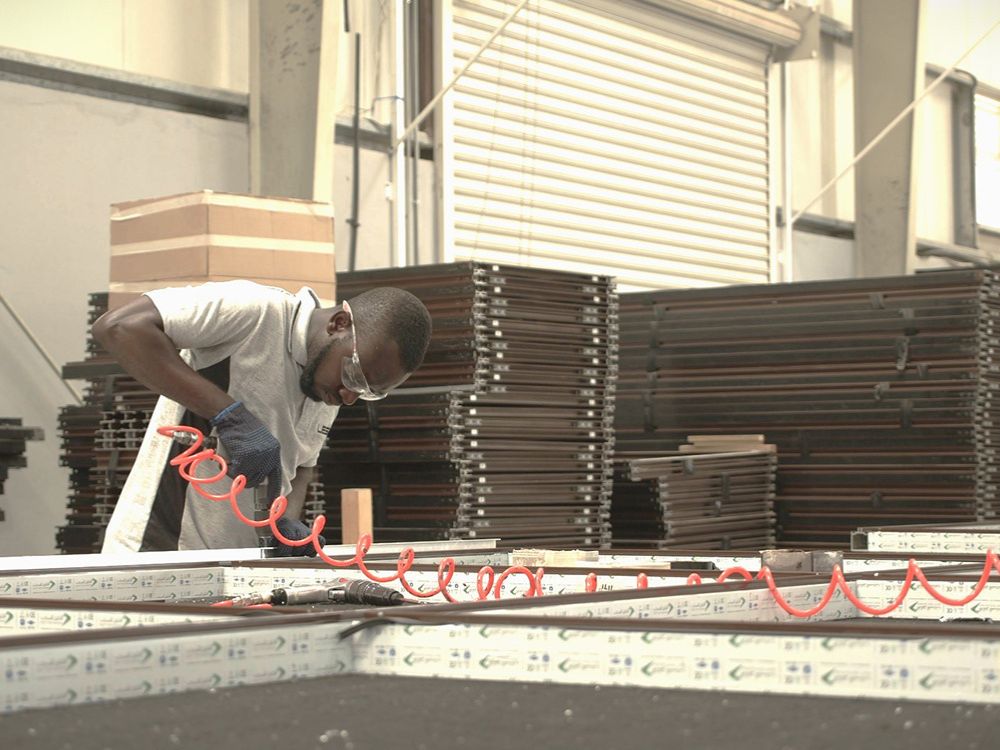
A unitized system flips the process. Complete facade panels frame, glass, gaskets, spandrels, and sometimes shading elements — are fabricated and glazed in a factory, shipped to site as finished “units,” and hoisted into position, typically one floor-height module at a time.
Because units interlock with engineered male-female joints, the system creates continuous pressure-equalized seals a major advantage against wind-driven rain and the UAE’s punishing dust and humidity.
The comparison: Unitized vs Stick Curtain Wall Systems
1. Speed of installation. Unitized systems install dramatically faster on site crews can fix entire floors in days because the labour-intensive work already happened in the factory. Stick systems require every component to be assembled at height, extending site programmes.
2. Quality control. Factory glazing under controlled conditions delivers consistent sealant application, gasket compression, and tolerances. On-site stick assembly is more exposed to heat, dust, and workmanship variation a real consideration when summer site temperatures exceed 45°C.
3. Performance. Unitized joints are engineered for pressure equalization, giving superior air and water tightness and better accommodation of building movement and thermal expansion — critical for high-rises facing serious wind loads.
4. Cost. Stick systems usually carry lower material and tooling costs, making them attractive for smaller projects. Unitized systems demand factory investment and early design freeze, but recover cost through faster programmes, less site labour, and reduced access equipment.
5. Logistics. Unitized panels need careful transport, crane time, and storage planning. Stick components are compact and easier to move — an advantage on congested urban plots.
Which System Should You Choose?
As a rule of thumb for UAE projects:
- Choose stick for villas, low-rise commercial, retail frontages, and bespoke geometric facades where flexibility matters most.
- Choose unitized for towers above roughly 10 storeys, fast-track programmes, and projects where envelope performance and weather-tightness are non-negotiable.
The decision also depends on facade engineering analysis wind loading, structural movement, thermal performance, and fire compliance. If you’re new to the discipline, start with our explainer on what facade engineering is and why it matters, and review the UAE facade fire safety compliance guide before specifying either system.
How Leskor Delivers Both Systems
At Leskor Metal Industries, we engineer, fabricate, and install both stick and unitized curtain walls from our Dubai Industrial City facility. Our in-house facade engineering team validates structural and thermal performance, while our manufacturing and installation division handles factory glazing, logistics, and site execution under one roof.
Planning a project and unsure which curtain wall system fits? Contact our team for a technical consultation.