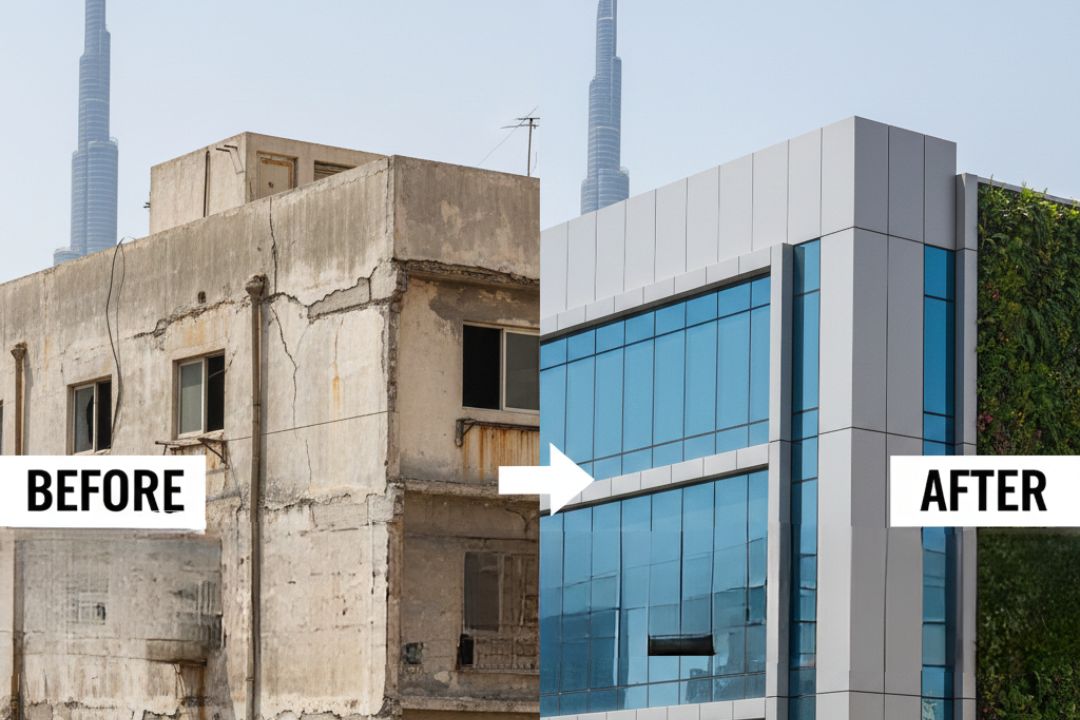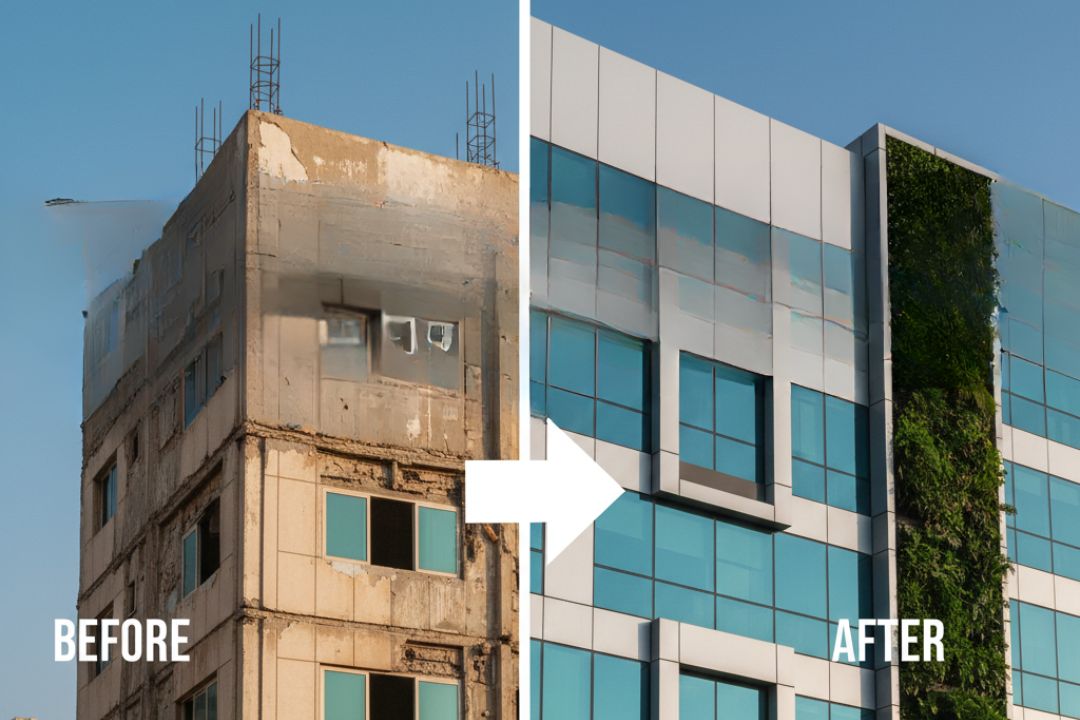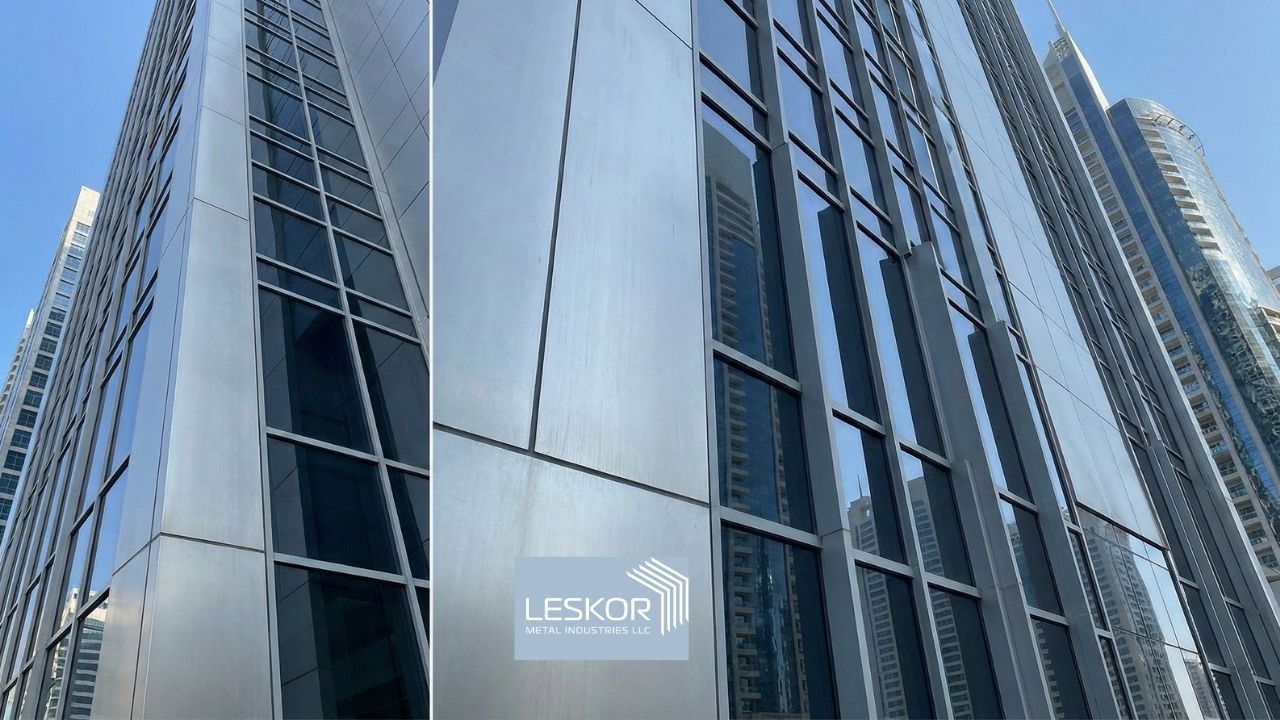
When you look at modern buildings across Dubai, Abu Dhabi, or Sharjah, the sleek glass façades often feel effortless. But behind that clean exterior is a carefully planned construction method. One of the most widely used approaches in the UAE is the curtain wall stick system especially for mid-rise, custom-designed, and cost-conscious projects.
In this blog, we’ll break down what a curtain wall stick system is, why it’s commonly used in the UAE, how it performs in harsh Gulf conditions, and when it’s the right choice for your project. This is written from real project experience, not theory
What Is a Curtain Wall Stick System?
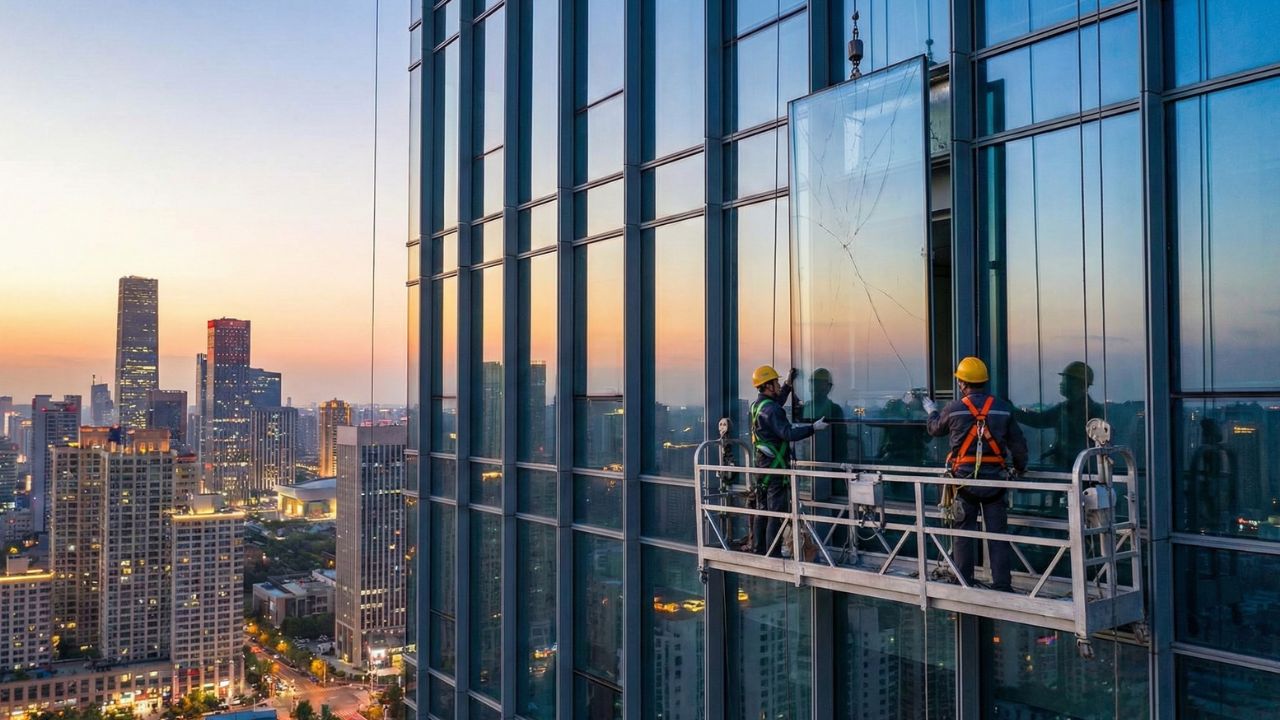
A curtain wall stick system is a façade construction method where aluminium profiles (mullions and transoms) and glass panels are delivered to site as individual components and assembled piece by piece on the building.
Unlike unitized curtain walls, which arrive as fully assembled panels from the factory, stick systems are built on-site. This makes them ideal for projects that require flexibility, customization, or on-the-spot adjustments.
In simple terms:
- Mullions are fixed first
- Transoms are connected
- Glass panels are installed last
- Sealing and finishing happen on site
This method has been used globally for decades and continues to be a reliable solution, especially in the Middle East.
Why Curtain Wall Stick Systems Are Popular in the UAE
From our experience working on façade projects across the UAE, the stick system remains a preferred option for several reasons:
1. Design Flexibility
Architectural changes happen frequently during construction. Stick systems allow adjustments without waiting for factory re-manufacturing, which is crucial for custom façades and mixed-use buildings.
2. Cost Efficiency for Mid-Rise Buildings
For low to mid-rise structures, stick-built curtain walls often offer a lower upfront cost compared to unitized systems, especially when crane access or logistics are limited.
3. Easier Transportation & Storage
Long aluminium profiles and glass units are easier to transport and store on constrained sites common in dense urban areas like Deira or Business Bay.
4. Better Fit for Irregular Structures
Buildings with stepped elevations, sunshades, fins, or façade articulation benefit from on-site assembly flexibility.
How Stick Systems Perform in UAE Climate Conditions
The UAE climate is unforgiving. Heat, UV exposure, sandstorms, and wind loads demand precise façade detailing.
A properly designed curtain wall stick system must address:
- Thermal insulation to reduce cooling loads
- Solar control glazing to manage heat gain
- Pressure-equalized drainage to prevent water and sand ingress
- UV-resistant sealants for long-term durability
Dubai Municipality and Abu Dhabi regulations require compliance with green building standards, making glazing selection and thermal breaks non-negotiable.
When installed correctly, stick systems perform just as well as unitized façades, even in extreme conditions.
Real Project Insight from the UAE
On a recent mid-rise commercial project in Sharjah, our team selected a curtain wall stick system due to frequent façade geometry changes between floors.
Instead of delaying progress with factory revisions, we adapted each bay on site. This saved weeks in scheduling and prevented costly rework. The key lesson? Quality control matters more than speed.
We implemented:
- A full façade mock-up before mass installation
- Daily sealant temperature monitoring
- Anchor verification with the structural engineer
The result was a clean façade finish, strong thermal performance, and zero water leakage issues post-handover.
Stick System vs Unitized Curtain Wall: Which One Should You Choose?
Here’s a simple comparison to help decision-makers:
Choose a Stick System if:
- Your building is low to mid-rise
- Design changes are likely
- Site access is limited
- Budget control is a priority
Choose a Unitized System if:
- You’re building a high-rise tower
- Speed of installation is critical
- You want maximum factory-controlled quality
There’s no “one-size-fits-all” answer. The right choice depends on height, budget, logistics, and design complexity.
Common Mistakes to Avoid
Over the years, we’ve seen recurring issues on poorly executed stick system projects:
- Skipping façade mock-up testing
- Underestimating wind-load anchor design
- Using non-tested sealants
- Ignoring drainage maintenance planning
- Poor coordination with MEP penetrations
Avoiding these mistakes can extend façade lifespan by years.
Maintenance & Long-Term Performance
One advantage of a curtain wall stick system is ease of maintenance. Since glazing is installed on-site, replacement and repairs are straightforward.
Building owners should plan for:
- Sealant inspection every 5–7 years
- Drainage cleaning after sandstorm seasons
- Periodic thermal performance reviews
With proper care, a stick-built curtain wall can perform efficiently for decades.
Why Choose Leskor for Curtain Wall Systems?
At Leskor, we approach façade systems with a practical mindset, balancing design intent, local regulations, and real-world site conditions. Our experience in UAE façade construction ensures every curtain wall stick system is designed, installed, and maintained for long-term performance.
Final Thoughts & Next Steps
The curtain wall stick system remains a smart, adaptable solution for many UAE projects. When specified correctly and installed by experienced professionals, it delivers excellent aesthetics, durability, and value.
If you’re planning a façade project, your next steps should be:
- Finalize system type early
- Review structural and thermal requirements
- Approve a full-scale mock-up
- Work with a façade specialist familiar with UAE codes