Walk down Sheikh Zayed Road or stare up at the glittering skyline of Downtown Dubai. What do you see? Most people see “architecture.” They see shapes, height, and ambition.
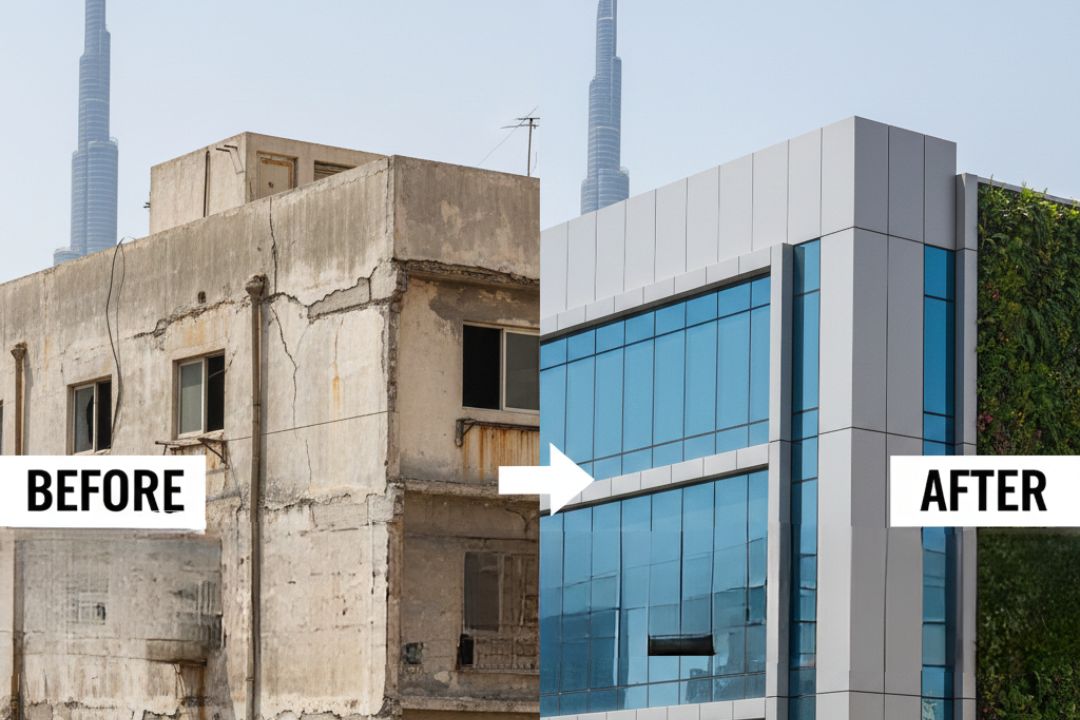
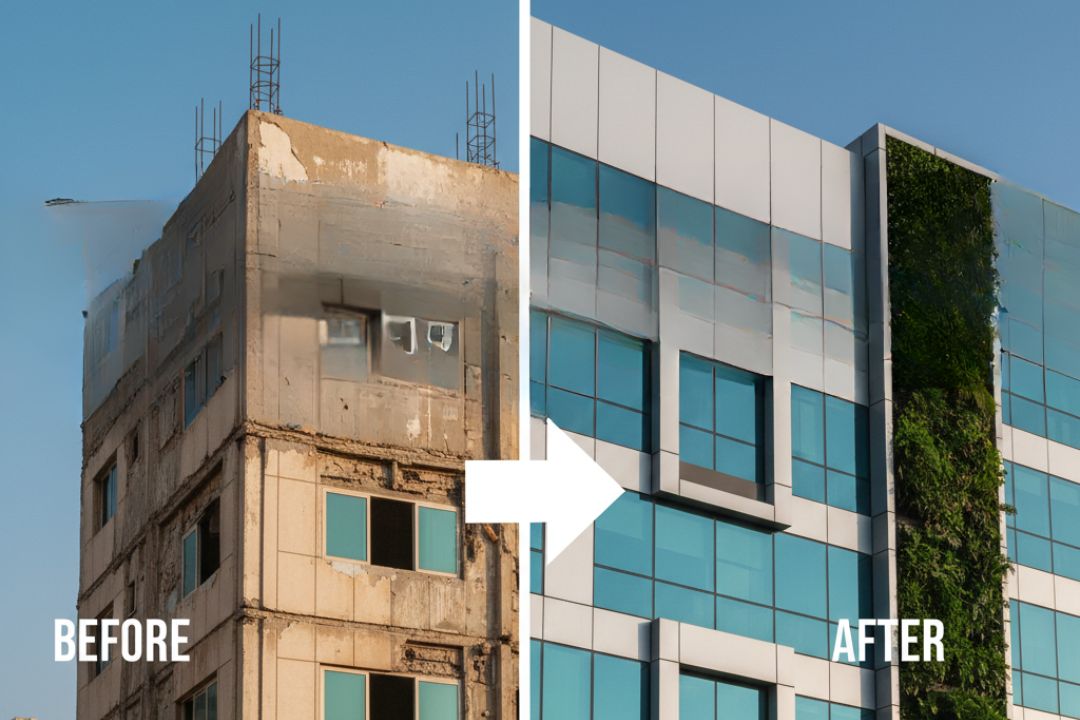
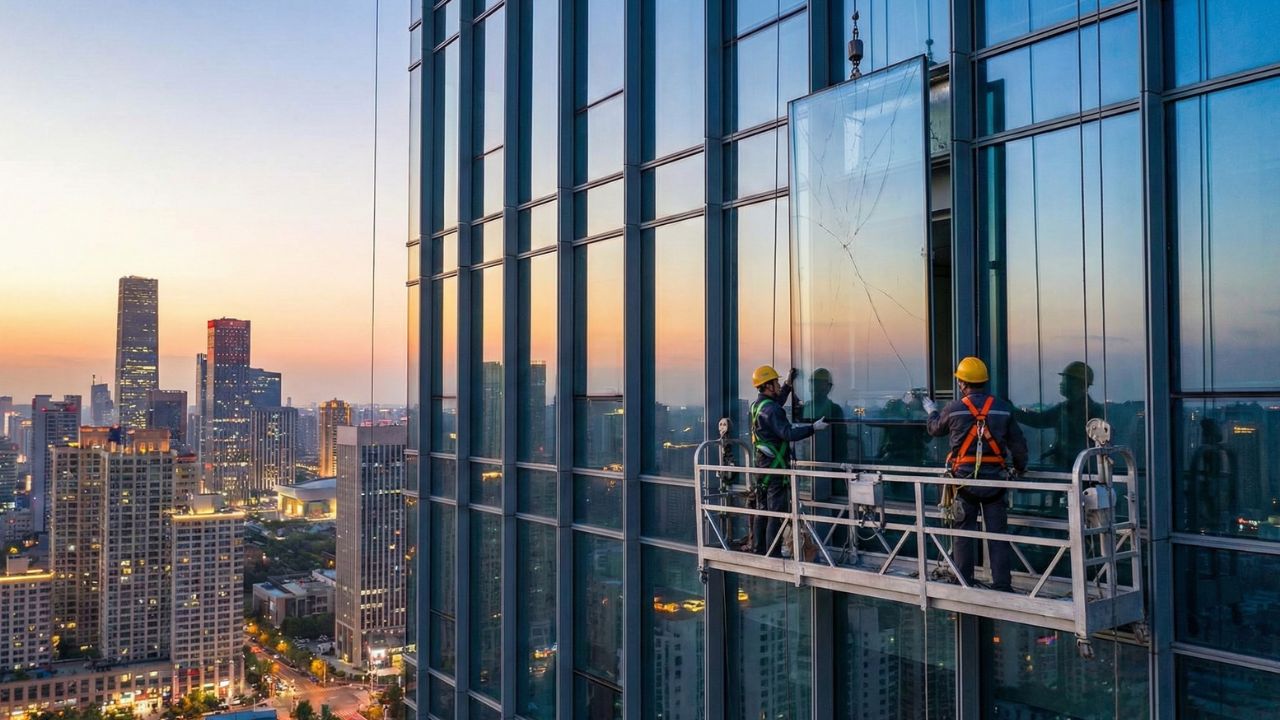
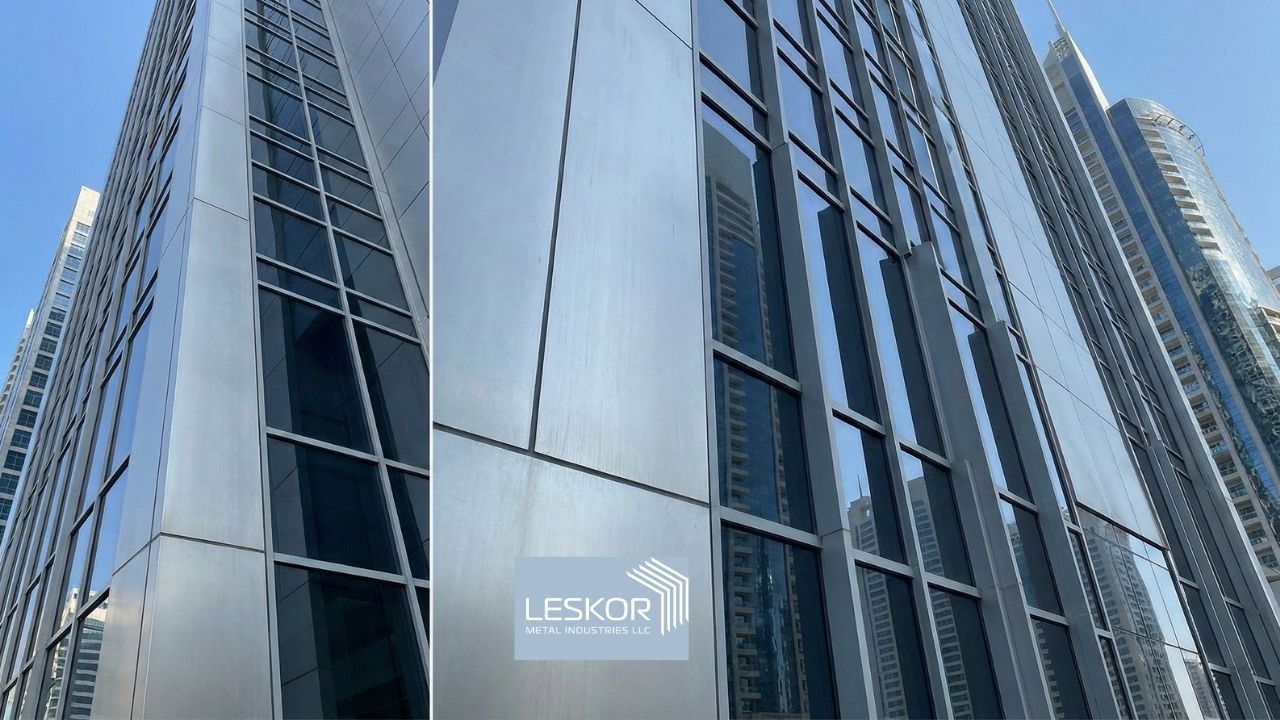
But when we look at those buildings, we see something else entirely. We see the envelope. We see the thousands of precise joints, the thermal breaks fighting off the 45°C July heat, and the intricate sub-structures holding it all together against the coastal winds.
As a metal facade fabricator operating in the UAE, we know that the skin of your building isn’t just about aesthetics, it’s the first line of defense. In 2025, with the UAE’s construction boom focusing heavily on sustainability and fire safety (Estidama and Al Sa’fat regulations), choosing the right fabrication partner isn’t just a design choice; it’s a compliance necessity.
If you are a developer, architect, or contractor in the UAE, this guide is for you. We’re pulling back the curtain on what it actually takes to fabricate the facades that define our cities.
More Than Just “Bending Metal”: The Modern Fabricator’s Role
Ten years ago, metal fabrication might have been viewed as a commodity service cut, bend, deliver. Today, the role has evolved into a complex mix of structural engineering, material science, and digital craftsmanship.
At Leskor, we often tell our clients: “We don’t just build walls; we engineer performance.”
The UAE Climate Factor
The elephant in the room for any UAE project is the environment. A generic metal facade system imported from Europe without modification will fail here. Why?
- Thermal Expansion: The temperature difference on a facade surface between a summer day and night can exceed 40°C. Metal expands and contracts. If your fabricator hasn’t calculated the tolerances perfectly, you get “oil canning” (warping) or, worse, structural failure.
- Salinity & Sand: For projects near the coast (like Jumeirah or Abu Dhabi’s Corniche), the salt air is aggressive. We use specific grades of aluminum and stainless steel with PVDF coatings that can withstand the “sandblasting” effect of desert winds.
Fabricator’s Note: We once inspected a project (not ours!) where the fabricator used standard steel fasteners on aluminum cladding. Within two years, galvanic corrosion set in, and the panels began to stain and loosen. Details matter.
2025 Trends: What’s Driving the Metal Facade Market?
The UAE facade market is projected to grow significantly as we approach 2030, driven by Vision 2040. Here is what is shifting in our workshop this year:
1. The Rise of “Green” Aluminum
With the UAE’s push for Net Zero, developers are asking for low-carbon materials. We are seeing a massive surge in demand for recycled aluminum composites. These materials offer the same structural integrity but drastically lower the embodied carbon of the building a key metric for LEED and Estidama certification.
2. Parametric & Bespoke Metalwork
Architects are no longer satisfied with flat squares. They want waves, perforations, and organic shapes.
- Laser Cutting Technology: We are increasingly using high-precision laser cutters to create perforated “mashrabiya” style screens that shade buildings (reducing cooling loads) while looking stunning.
- 3D Modelling Integration: We don’t just read blueprints; we integrate our fabrication software directly with the architect’s BIM (Building Information Modeling) files to ensure every curve is pixel-perfect before a single sheet of metal is cut.
3. Fire Safety is Non-Negotiable
Since the update to the UAE Fire and Life Safety Code of Practice, the testing requirements for metal cladding have become rigorous. A competent fabricator must provide systems that are A1 or A2 non-combustible rated. At Leskor, we ensure every panel, sealant, and bracket in our assembly meets Civil Defense approval.
The Process: From CAD to Construction Site
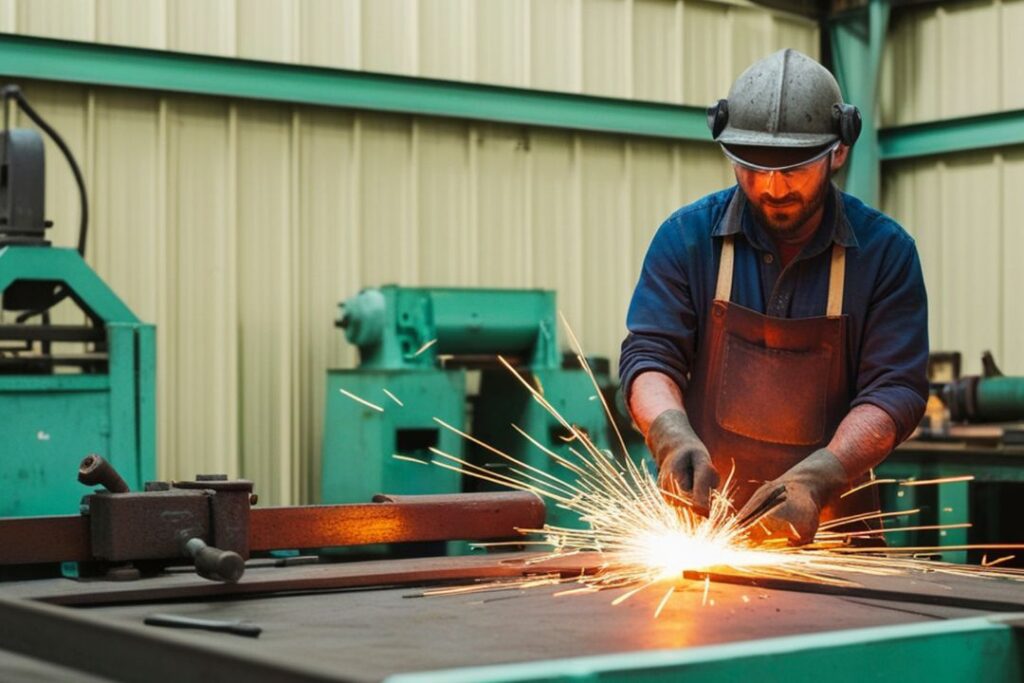
Transparency is key to trust. Here is a look at the workflow inside a high-end metal facade fabricator’s facility in the UAE.
Phase 1: Design Assist & Engineering
This is where we save you money. By getting involved early, we can rationalize the design.
- Example: An architect designs a complex twisted fin. If we fabricate it exactly as drawn, it might require expensive custom molds. We might suggest a “segmented” approach that looks identical but uses standard fabrication methods, saving the client 20% on material costs.
Phase 2: Precision Fabrication
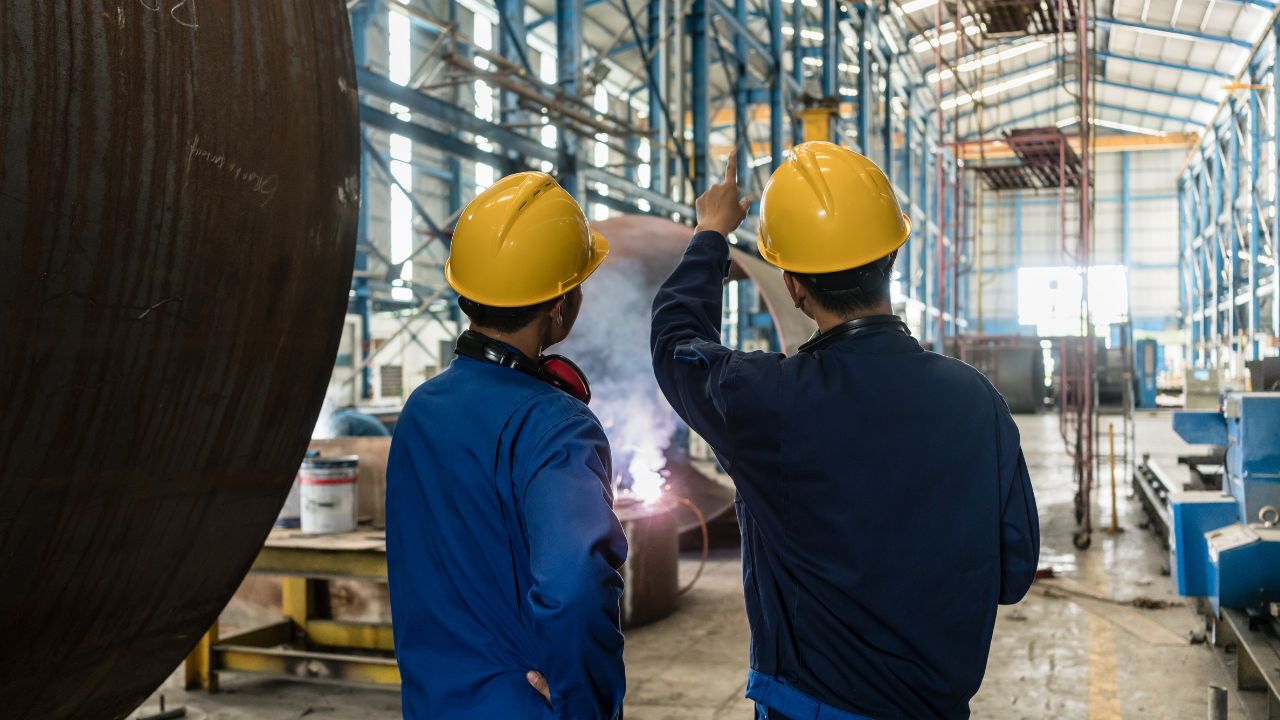
Our factory floor is a mix of brute force and robotic precision.
- CNC Machining: Computer Numerical Control machines route the aluminum composite panels (ACP) or solid aluminum sheets with 0.1mm accuracy.
- Rolling & Bending: For curved facades, we use automated rollers. This isn’t just bending; it’s coaxing the metal into shape without stressing the material grain.
Phase 3: Assembly & Unitization
For high-rise towers, we often use “Unitized Systems.” We assemble the glass and metal frames into large panels inside our factory. Why do this?
- Quality Control: It’s easier to seal a joint perfectly in a clean factory than hanging off a cradle 50 floors up in the wind.
- Speed: Installation on-site is much faster.
Where can I find metal facade fabricators with experience in commercial projects in the UAE?
This is one of the most common questions we get from procurement managers who are tired of sifting through generalist workshops that mostly do residential gates or kitchen counters.
Finding a partner capable of executing a 40-story commercial tower or a sprawling retail complex requires looking in the right places. In the UAE, the industry is clustered in specific industrial hubs where the logistics of moving heavy metal and glass are manageable.
1. The Industrial “Power Hubs” If you want to see who is actually doing the work, go to where the factories are.
- Dubai Industrial City (DIC): This is increasingly becoming the HQ for high-tech fabrication. It is where you will find modern facilities (including Leskor’s own operations) that require large square footage for unitized panel assembly.
- Jebel Ali Free Zone (JAFZA): Historically the hub for heavy industry and export-focused fabricators.
- Sharjah Industrial Areas: A hub for many legacy fabricators and raw material suppliers.
2. The “Commercial” Litmus Test Searching online can be misleading. A fabricator might rank for “commercial projects” but only have experience with small shopfronts. To find true commercial-grade partners, look for these specific indicators in their digital footprint:
- The “Unitized” Keyword: If a fabricator mentions “unitized curtain walls” prominently, they are almost certainly equipped for large-scale commercial work. Small residential players rarely touch this technology.
- Trade Directories: Don’t just use Google Maps. Look at the member lists of the UAE Contractors Association or specialized listings on platforms like Made in UAE Gate. These platforms often vet the trade license activities of their listed companies.
3. Ask Your Main Contractor Most Tier-1 contractors in the UAE (the likes of ALEC, Multiplex, etc.) keep a pre-qualified list of facade sub-contractors. If you are a developer, ask your main contractor who they trust to handle the “critical path” of the building envelope. You will often see the same 5-10 names pop up companies that have proven they can hit the deadlines required for commercial handover.
Pro Tip: When you find a potential fabricator, ask to visit their factory during a shift. A commercial-grade fabricator will have a flow of materials, raw aluminum in one end, finished, wrapped unitized panels out the other. If the factory is empty or silent, they likely lack the capacity for a commercial deadline.
How to Vet Your Metal Facade Fabricator
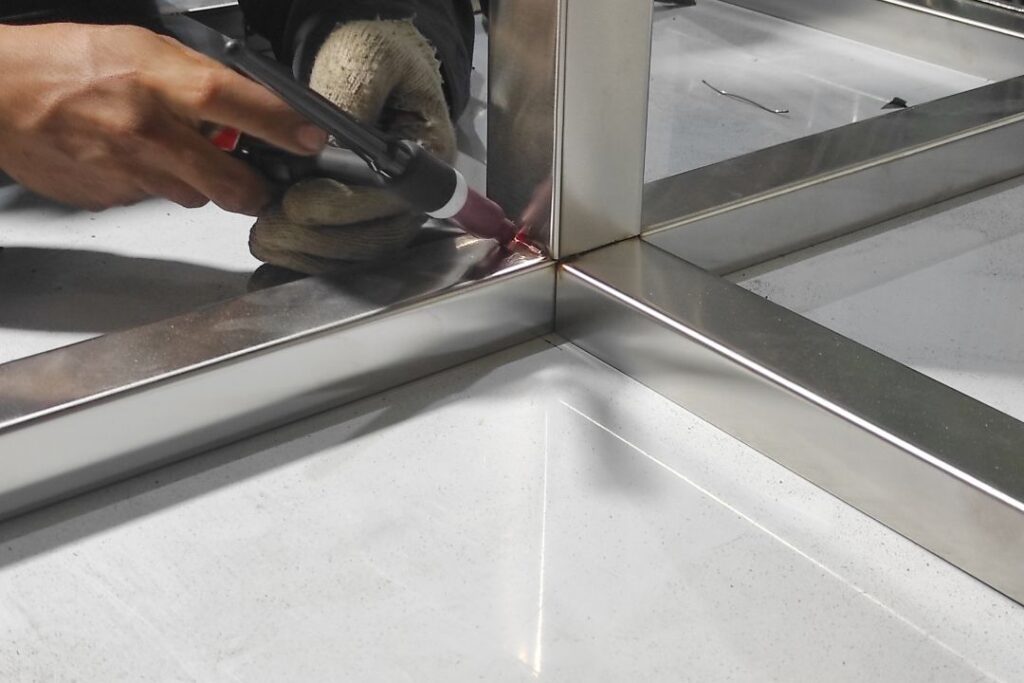
Not all fabricators in the UAE are created equal. If you are tendering a project right now, ask these three questions to separate the pros from the amateurs:
- “Can you show me your Civil Defense Compliance Certificates for this specific system?”
- Red Flag: If they show you a generic certificate for the material but not the assembled system. The fire rating applies to the whole wall assembly, not just the panel.
- “How do you handle ‘As-Built’ discrepancies?”
- Good Answer: “We conduct a 3D point cloud scan of the concrete structure before we start fabrication to adjust our shop drawings to the reality of the site.”
- Bad Answer: “We just measure with a tape measure and hope it fits.”
- “What is your capacity for ‘Unitized’ vs. ‘Stick’ systems?”
- Expertise: A top-tier fabricator understands the logistics of both. Stick systems (assembled on-site) are better for complex, low-rise geometries. Unitized systems are essential for high-rise speed.
The Economics of Quality: Price vs. Value
We understand that budget is always a factor. However, “value engineering” a facade often leads to “cost cutting” that hurts you later.
Cheap Fabrication Costs You More in the Long Run:
- Leaking: Poorly routed joints rely entirely on sealant. When that sealant dries out in 3 years, water gets in.
- Fading: Sub-par powder coating will fade under the UAE sun, turning your sleek grey building into a patchy purple one.
- Replacement: Replacing a facade on an occupied building is a logistical nightmare and costs 3x the original installation price.
At Leskor, we price for longevity. We use marine-grade alloys, verified fasteners, and rigorous QA/QC processes because we want your building to look as good in 2040 as it does in 2025.
Conclusion: Let’s Build the Future of UAE Skylines
The facade is the face your building presents to the world. It dictates energy efficiency, safety, and market value. As we move further into 2025, the demand for high-performance, sustainable, and aesthetically daring metal facade fabricators is higher than ever.
Whether you are planning a boutique commercial hub, a sprawling residential compound, or a high-tech industrial facility, you need a partner who understands the engineering behind the aesthetics.
Leskor Metal Industries is ready to be that partner. We combine local UAE expertise with international fabrication standards to deliver envelopes that perform.