A facade panel on the 70th floor of a Dubai tower experiences forces most people never think about. Wind doesn’t just push against tall buildings — it accelerates around corners, creates suction zones strong enough to pull glass outward, and generates vibrations that repeat millions of times over a building’s life.
This is why wind load analysis sits at the heart of facade engineering. Get it right, and the envelope performs silently for decades. Get it wrong, and the consequences range from leaks and rattling panels to catastrophic glass failure. Here’s how facade engineers approach it — and why it matters for every developer and consultant in the UAE.
Why Wind Is the Governing Load for Most Facades
Unlike the building’s concrete or steel frame, the facade is a lightweight skin. Its own weight is rarely the problem; lateral wind pressure is. On UAE high-rises, design wind pressures can vary dramatically across a single elevation:
- Positive pressure pushes panels inward on windward faces.
- Negative (suction) pressure pulls panels outward on leeward faces, corners, and parapets — often the most severe condition.
- Local effects at building corners and edges can multiply pressures well beyond the field-of-wall values.
This is why two identical-looking panels on the same tower may require different glass thicknesses, mullion sizes, or bracket designs.
How Engineers Calculate Facade Wind Loads
1. Code-based analysis. For most projects, engineers derive design pressures from international standards (such as ASCE 7 or Eurocode methodologies referenced by UAE authorities), factoring in building height, exposure, terrain, and geometry.
2. Wind tunnel testing. For supertall, slender, or unusually shaped towers, scale models are tested in boundary-layer wind tunnels. Pressure taps across the model map the real distribution of loads — frequently revealing localized suctions that codes would underestimate.
3. Structural design of the system. Once pressures are known, every component is sized to resist them: glass thickness and type, mullion and transom profiles, brackets and anchors, and the silicone or gasket joints that transfer load between them. Deflection limits matter as much as strength — a mullion that bends too far can break glass or open seals even without failing structurally.
4. Performance testing. Before and during installation, curtain wall mock-ups undergo air infiltration, water penetration, and structural load testing — confirming the engineered system performs as calculated. This testing culture is a core part of professional facade construction in the UAE.
Movement, Thermal Stress, and Fatigue
Wind never acts alone. UAE facades must simultaneously absorb:
- Building sway and inter-storey drift during wind events
- Thermal expansion as aluminium surfaces cycle from cool nights to 80°C+ surface temperatures
- Seismic movement allowances required by local codes
Facade engineers design stack joints, slotted brackets, and flexible seals so the envelope “floats” with the structure rather than fighting it. This is one reason engineered systems matter more than individual materials — a theme we explore in what facade engineering is and why your metal facade fabricator matters more than you think.
What Happens When Wind Engineering Is Neglected
Across the region, under-engineered facades reveal themselves through whistling joints, water ingress during shamal storms, cracked glass at corner zones, and premature sealant failure. Repairs at height are exponentially more expensive than correct design — often requiring facade glass replacement or full facade replacement works years ahead of schedule.
Leskor’s Approach to Facade Structural Engineering
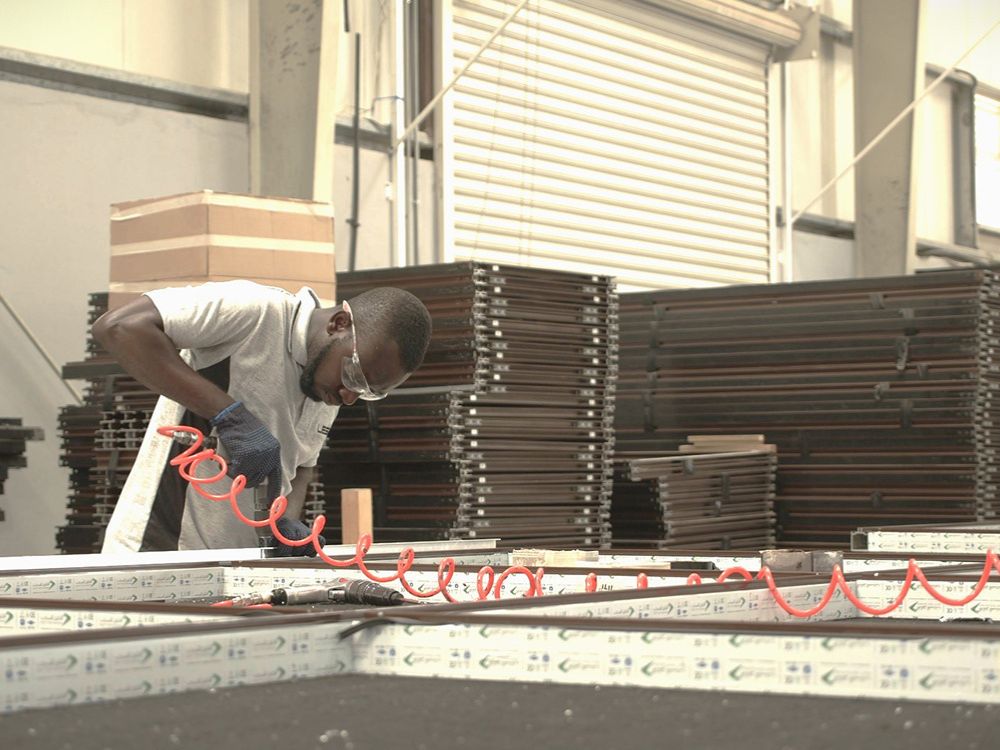
Our facade engineering team performs structural calculations, thermal analysis, and system design for curtain walls, cladding, and architectural metalwork — then carries that engineering through manufacturing and installation so nothing is lost between calculation and construction.
Designing a tower or upgrading an existing envelope? Talk to Leskor’s engineers about wind load analysis for your project.